In terms of fundamental research, proximity sensors hold an even more prominent position. The development of modern science and technology has advanced into many new frontiers: for instance, macroscopic observations spanning thousands of years in the vast universe, microscopic examinations of the femtoscale particle world, and vertical observations of celestial evolution over centuries and transient responses in short durations. Let’s explore what proximity sensors bring to our lives.
Furthermore, the development of new energy sources, novel materials, and the in-depth study of various extreme technologies—such as ultra-high temperature, ultra-low temperature, ultra-high pressure, ultra-high vacuum, strong magnetic fields, and ultra-weak magnetic fields—also rely significantly on proximity sensors. It is evident that without suitable proximity sensors, it would be impossible to obtain a vast amount of information that human senses cannot directly perceive. Many obstacles in fundamental scientific research stem from the difficulty in acquiring information about the subject. The high sensitivity detection of new mechanisms and proximity sensors often leads to breakthroughs in these fields. In many cases, the development of certain proximity sensors paves the way for advancements in interdisciplinary areas.
Proximity sensors have permeated various aspects of life, including industrial production, universal development, marine exploration, environmental protection, resource investigation, medical diagnosis, bioengineering, and even cultural relic preservation. It is no exaggeration to say that, from the vastness of space to the depths of the oceans, and across various complex engineering systems, almost every modern project relies on a variety of proximity sensors.
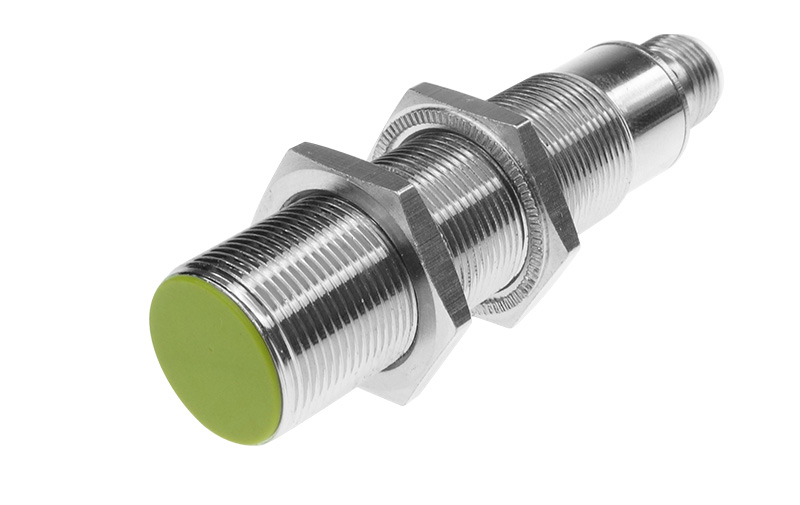
Performance Characteristics of Proximity Switch Sensors:
Proximity switch sensors can be used for stroke control, limit protection, or non-contact detection devices to measure component dimensions and speed. They are also applicable in frequency meters, frequency pulse generators, liquid level control, and automatic convergence of processing programs. These sensors offer high reliability, long service life, low power consumption, high precision, accurate positioning, high operating frequency, and adaptability to harsh working conditions.
Standard Proximity Switch Sensor Performance Characteristics:
Among various types of open sensors, some possess the ability to "sense" the proximity of a component displacement sensor to its target. By utilizing the sensing characteristics of displacement sensors relative to approaching objects, the switching or closing of control switches can be achieved.
When an object moves toward a proximity switch sensor and reaches a certain distance, the displacement sensor is "activated." This distance is generally referred to as the "detection range." Different proximity switches have varying detection ranges.
Sometimes, objects are detected within specific time intervals—one moving toward the proximity sensor and another repeating the action. Different proximity sensors exhibit varying capabilities in detecting objects. This response characteristic is known as the "response frequency."
From the above information, it is clear that proximity sensor technology plays a vital role in economic development and social progress. It is believed that in the near future, proximity sensor technology will achieve an important status commensurate with its potential, ushering in a new level of advancement.
 浙公网安备 33020602001534号